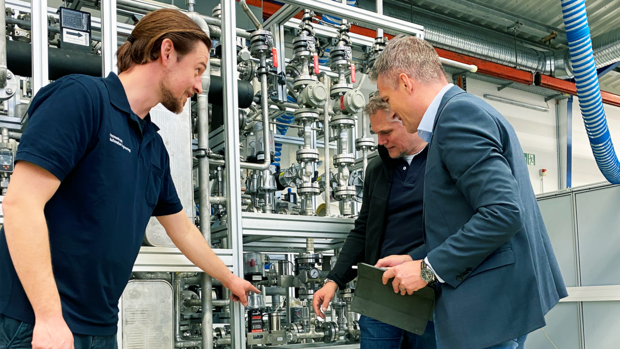
Hydrogen solutions
Flexible production and testing systems along the entire H2 value chain
We are the H of Hydrogen!
The demand for clean energy continues to grow and hydrogen is becoming an essential solution for a sustainable and decarbonized world. At thyssenkrupp Automation Engineering, we are leaders in the entire hydrogen value chain, from production to utilization. By providing cutting-edge technologies and innovative engineering, we are driving the sustainable energy future. By contributing your expertise to hydrogen technology, you will become an agent of change that will help us move towards a greener and more prosperous future.
We don't just talk, we act. With us, an idea becomes reality.
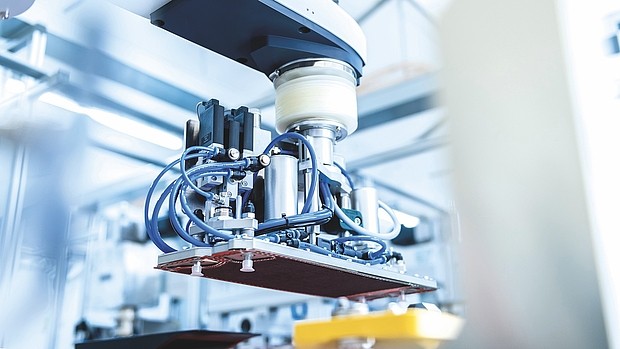
Fuel cell
The fuel cell is a technology that is revolutionizing emission-free energy conversion for green mobility and decentralized power generation. To make this a success, we develop and install complete production lines and test benches for fuel cell systems at our customers' premises, provide production facilities for customer-specific requirements and offer professional advice in the run-up to projects.
We support you along the entire value chain of membrane (PEM), oxide ceramic (SO) and similar fuel cell systems.
Electrolyzer
An electrolyzer uses electrical energy to split water molecules into hydrogen and oxygen. From a production technology perspective, fuel cells and electrolyzers are largely identical. Many concepts and experiences can therefore be transferred from one product to the other. For this reason, we also offer our production expertise in the field of fuel cells for electrolyzers to our customers.
Bring your various electrolyzers into series production with us!
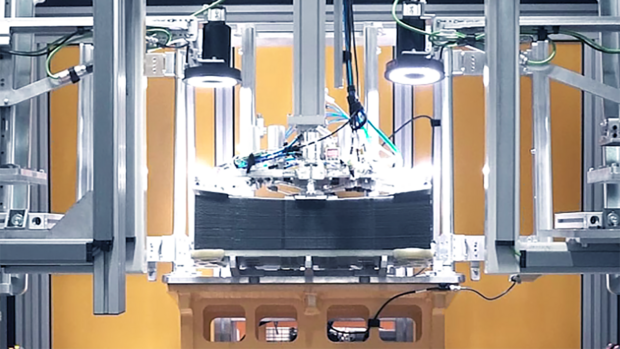
Stack and system assembly
Our customers are often confronted with a variety of quality-related challenges during stack assembly, such as precise alignment and fast stacking. Thanks to our many years of experience, we can solve these challenges in the best possible way.
We assemble your product!
Test and inspection technology
In production, the delivery of safe, functional and tolerance-compliant components has top priority. However, the test equipment required to detect NOK components is often cost-intensive and does not add value in itself. Determining suitable quality gates is therefore a decision with far-reaching consequences for any production planning. Particularly where components are still subject to continuous (further) development and production processes and parameters have yet to be established, a closer inspection of components can often be profitable. This can prevent expensive production errors - or, in the worst case, field returns.
From quality monitoring and quality improvement.